
If you’ve ever stood in the toothpaste aisle at the Highgate Shoppers Drug Mart staring at a wall of whitening strips, gels, pens, and “charcoal” pastes wondering which one actually works — you’re not alone. Teeth whitening is one of the most common questions we get at Burnaby South Dental, and the honest answer is: it depends on what you’re trying to fix, and how quickly.
This guide breaks down what actually works, what doesn’t, and how to whiten your teeth safely — whether you’re prepping for a wedding at Deer Lake Park or just tired of how your morning coffee has caught up with your smile.
First, why do teeth get yellow in the first place?
Tooth discoloration falls into two main categories, and the difference matters because they don’t respond to whitening the same way:
- Extrinsic stains sit on the outer enamel. They come from coffee, black tea, red wine, dark sauces, smoking, and vaping. These are the stains whitening products are designed to remove.
- Intrinsic stains are inside the tooth. They can be caused by certain antibiotics taken in childhood (like tetracycline), too much fluoride during tooth development, dental trauma, or simply aging — as enamel thins, the yellower dentin underneath shows through more.
Most over-the-counter products only meaningfully address extrinsic stains. Intrinsic discoloration usually needs professional treatment, and in some cases, veneers or bonding are a better fit than bleaching. That’s why a quick exam matters before you spend money on whitening — you want to know what kind of discoloration you actually have.
What’s actually in teeth whitening products?
Almost every effective whitening product — whether you buy it at the drugstore or get it from your dentist — uses one of two active ingredients: hydrogen peroxide or carbamide peroxide (which breaks down into hydrogen peroxide once it touches your teeth). The peroxide oxidizes the molecules causing the stain, lightening the tooth.
The difference between “okay results” and “wow, your teeth look amazing” almost always comes down to two things: the concentration of peroxide and how long it stays in contact with your teeth. That’s the whole game.
Whitening toothpastes and charcoal pastes: do they work?
Whitening toothpastes mostly rely on mild abrasives to scrub off surface stains, with a small amount of peroxide in some formulas. They can keep already-white teeth looking bright, but they won’t change the underlying shade of your teeth in any dramatic way.
Charcoal toothpastes are a different story. Health Canada and the Canadian Dental Association have both flagged concerns: charcoal is abrasive enough to wear down enamel over time, and once enamel is gone, it doesn’t grow back. Worn enamel actually makes teeth look more yellow because more dentin shows through. We tend to advise patients to skip charcoal entirely.
Whitening strips and drugstore gels
Drugstore whitening strips (the well-known brands you’ll find on the Kingsway pharmacy shelves) typically use 6–10% hydrogen peroxide. Used as directed, they can produce a noticeable change of two to four shades over a couple of weeks for people with light surface staining.
The trade-offs:
- The strips don’t fit the contours of your teeth perfectly, so coverage can be uneven — especially on crowded or rotated teeth.
- Gel can leak onto your gums and cause irritation.
- If you have any untreated cavities, exposed roots, or worn enamel, the peroxide will hit your nerves and the sensitivity can be brutal.
This is the part most people miss: whitening on top of an undiagnosed cavity or cracked tooth is a fast track to pain. A short checkup before you whiten — at home or in our office — can save you a miserable week.
Custom take-home trays from your dentist
This is the option a lot of our Burnaby patients land on once they understand the difference. We take an impression of your teeth, make a thin custom tray that fits your bite exactly, and send you home with professional-strength whitening gel (usually 10–22% carbamide peroxide).
Because the trays seal against your teeth, the gel stays where it’s supposed to, gum irritation drops, and the results are more even than strips. Most people wear them 30 minutes to a couple of hours a day for one to two weeks. The trays are reusable, so when you want to touch up after a year of cold-brew season, you just buy more gel — no new impressions needed.
In-office professional whitening
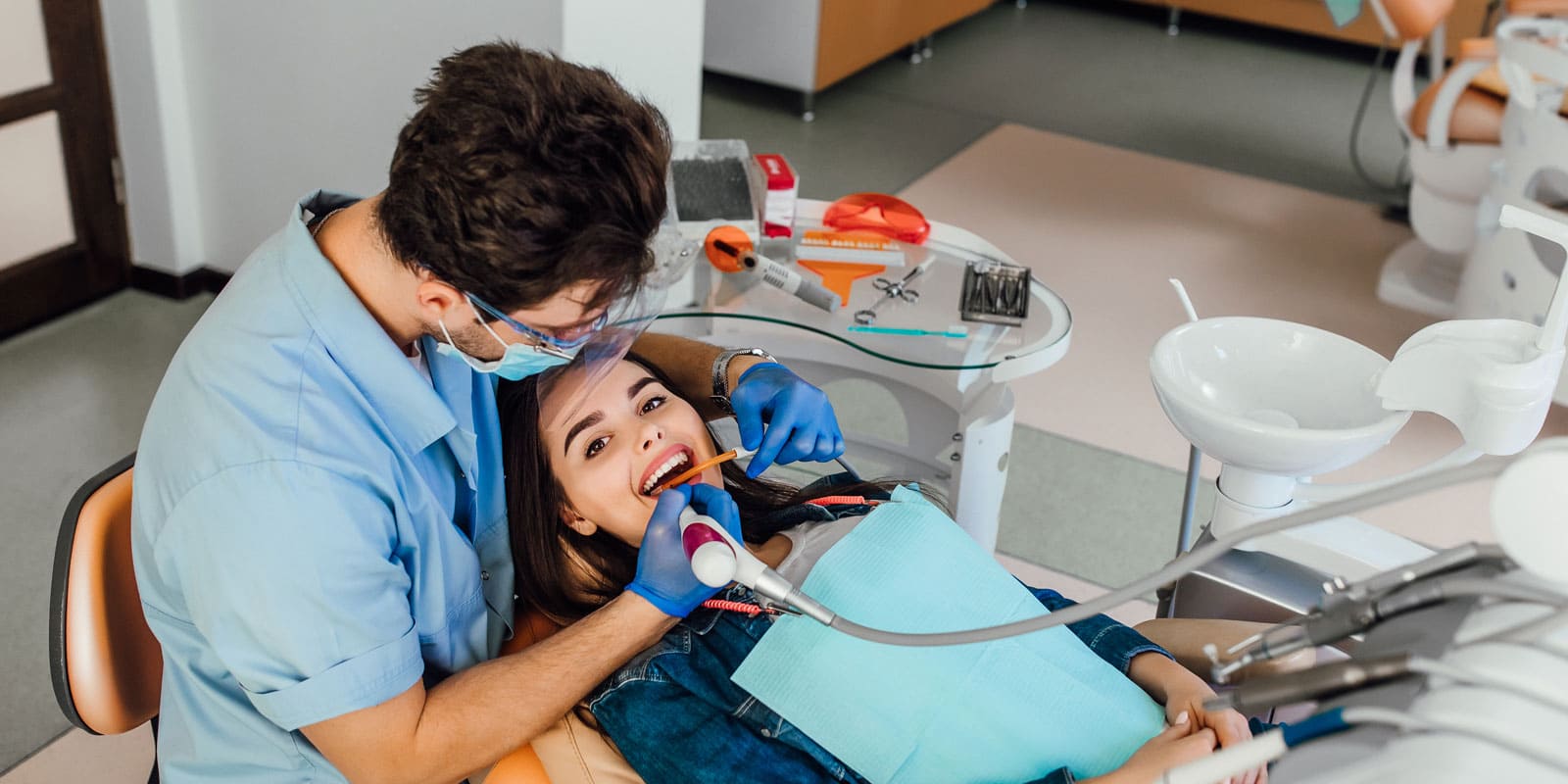
If you want the biggest visible change in the shortest amount of time, in-office whitening is the gold standard. We isolate your gums with a protective barrier, apply a high-concentration peroxide gel (often 25–40%), and activate it in sessions over about an hour.
Results are visible immediately. We typically see patients lighten by five to eight shades in a single appointment, which is why this is the option people choose before weddings, graduation photos at SFU, or big work events.
The honest downsides: it costs more than at-home options, and roughly half of patients experience temporary tooth sensitivity for 24–48 hours afterward. We pre-treat with a desensitizing gel for anyone prone to sensitivity, which helps a lot.
What about whitening pens, LED kits, and TikTok hacks?
Whitening pens are convenient for spot touch-ups but the gel washes off in saliva quickly, so the active ingredient doesn’t stay on the tooth long enough to do much.
The LED light kits sold online — the ones with a mouthpiece you bite onto while a blue light glows — are mostly marketing. Studies have repeatedly shown the light itself doesn’t meaningfully accelerate whitening at the low intensities used in consumer kits; it’s the peroxide doing the work.
And the DIY hacks: lemon juice, baking soda, apple cider vinegar, hydrogen peroxide swishes, oil pulling. Please don’t. Acidic and abrasive home remedies erode enamel, which permanently damages your teeth and ironically makes them look more yellow over time. There’s no shortcut here that won’t cost you down the road.
How long do whitening results last?
For most people, professional whitening lasts 12 to 24 months before a touch-up is helpful — longer if you avoid the usual culprits (coffee, tea, red wine, smoking) and shorter if you don’t. A few simple habits stretch results significantly: rinse with water after coffee, drink staining beverages through a straw when practical, and keep up with your regular cleanings.
Who shouldn’t whiten?
Whitening isn’t for everyone. We generally recommend against it (or want to do an exam first) if you:
- Have untreated cavities or active gum disease
- Have crowns, veneers, or large fillings on front teeth — these don’t whiten and can end up looking mismatched with the rest of your smile
- Are pregnant or breastfeeding
- Are under 16, as enamel and pulp are still developing
- Have severe tooth sensitivity or exposed roots
So what should you actually do?
If you’re in Burnaby and thinking about whitening, here’s the short version of what we tell patients in the chair:
- If it’s been a while since your last cleaning, book that first. A professional cleaning alone removes a surprising amount of surface staining — sometimes that’s all people need.
- If you have light, even staining and you’re patient, drugstore strips are a reasonable starting point.
- If you want a real, even, longer-lasting result, custom take-home trays are usually the best balance of cost, comfort, and effectiveness.
- If you have an event coming up and want maximum brightness fast, in-office whitening is built for exactly that.
- If you have crowns, veneers, dark intrinsic staining, or sensitivity, come in for an exam first — peroxide is not the right tool for every job.
If you’d like to talk through which option fits your teeth, your timeline, and your budget, give our Highgate office a call or book an appointment online. We’ll take a look, talk you through realistic results, and help you skip the $400 worth of drugstore experiments most people end up doing first.